How Often Should Men Get a Haircut? A Schedule by Style
In this guide
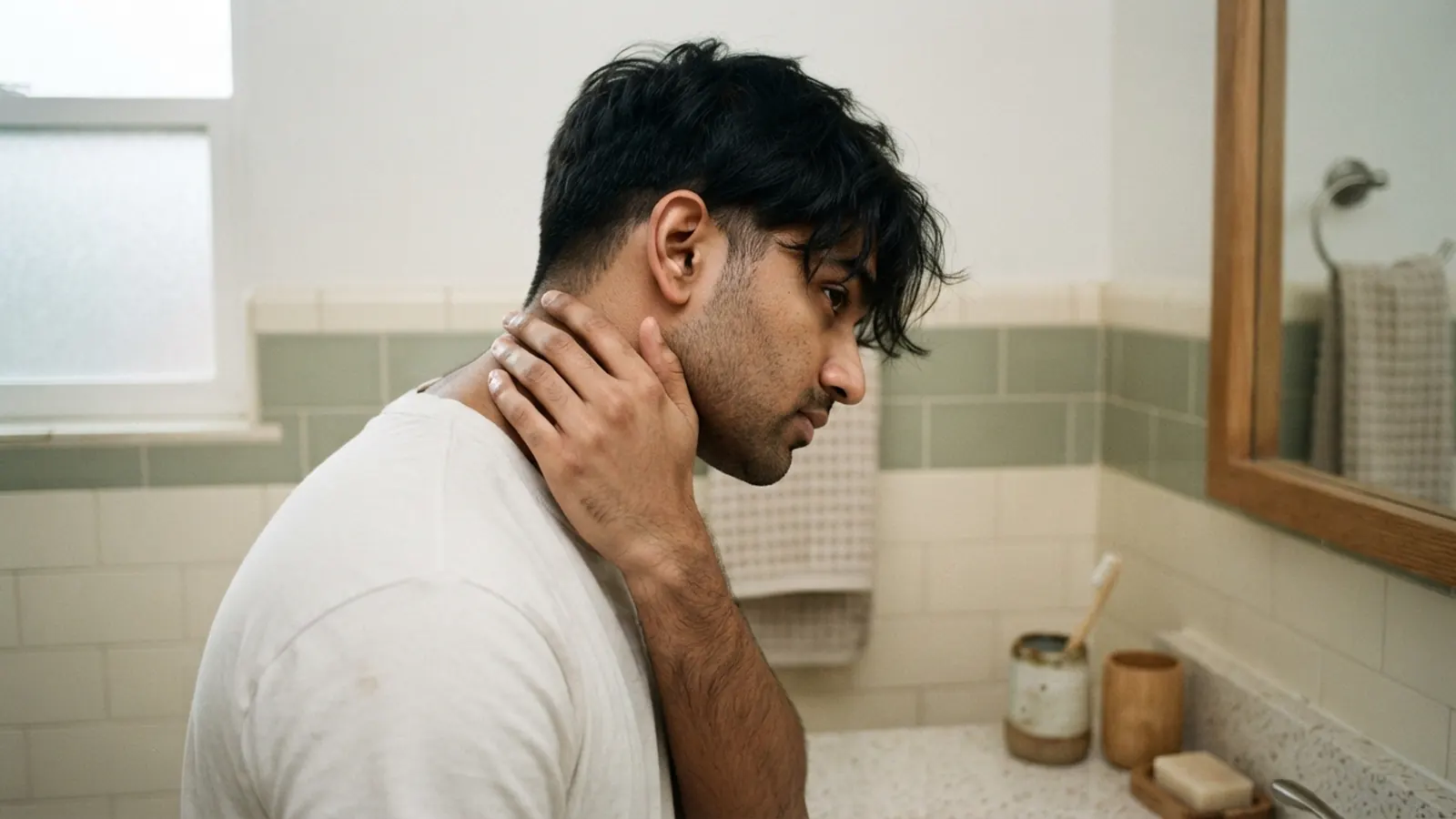
Day one, the fade looks sharp. Day ten, you catch your reflection in a shop window and the sides have gone soft. Day eighteen, the neckline has crept down your collar and your mother asks if you're growing it out.
So how often should men get a haircut? There's no single answer, and anyone who gives you one number hasn't looked at your sides. The shorter the sides, the sooner you're back in the chair. That's really the whole rule. Everything below is detail.
Why short cuts wear out first
Scalp hair grows roughly 1 to 1.5 cm a month. That varies from person to person, but it's a fair working number.
What matters is how much that growth is compared with the cut. On a number one fade, the sides start at about 3 mm. Two weeks later they've roughly doubled, and the gradient that made it a fade is blurring. On a number four taper (13 mm), the same two weeks adds maybe half a centimetre. You notice it, but it still looks deliberate.
The top behaves differently. A month of growth on 10 cm of hair barely changes the length. What changes is the shape: the ends get heavier, the front starts to drop, and the style stops sitting the way it did.
So short cuts need frequent visits to keep the length. Longer cuts need less frequent visits to keep the shape.
How often men should get a haircut, by style
These are the gaps that keep each cut looking like itself. Go a week past and nobody will call the police. Go three weeks past and it's a different haircut.
| Style | Book every | What goes first |
|---|---|---|
| Skin fade, bald fade | 2 weeks | The blend, then the neckline |
| Taper fade (number half to three) | 2 to 3 weeks | Neckline and the hair above the ears |
| Buzz cut, one length | 2 to 4 weeks | The outline and the back of the neck |
| Crew cut | 3 to 4 weeks | The sides lose their taper |
| Textured crop, French crop | 3 to 4 weeks | The fringe drops into your eyes |
| Two-block | 3 to 4 weeks for the undercut, 6 to 8 for the top | The undercut grows into the top |
| Curly top fade | 2 to 3 weeks for the fade, 6 to 8 for the curls | The fade, long before the curls |
| Side part, quiff, pompadour | 4 to 6 weeks | Sides puff out, the front gets heavy |
| Curtain fringe, scissor cuts over the ears | 6 to 8 weeks | Fringe length and bulk at the sides |
| Medium to long hair | 8 to 12 weeks | Weight and split ends |
Notice the split rows. On a two-block or a curly top fade, you don't need a full cut every time. Ask for "sides only, top same" on alternate visits. Many barbers will charge less for it, and the top gets the time it needs to grow.
If a buzz cut is your thing and you own a decent trimmer, the schedule is whatever you want it to be. The buzz cut is the one style most men can keep up at home.

The signs you're overdue
You don't need a calendar reminder. Your hair tells you.
The fade has no visible gradient any more. If you can't see where the shortest guard ends, the fade is gone.
Hair is touching the tops of your ears, on a cut that's meant to sit clear of them.
The neckline is fuzzy and heading south. This is usually the first thing other people notice, even if you can't see it.
Your usual amount of product doesn't hold. Heavier hair needs more, and once you're adding a second scoop of clay, the cut has moved on without you.
The sides puff out while the top lies flat. This one is worth taking seriously, because it makes your head look wider and rounder than it is. On a round face, it's the worst thing a grown-out cut can do.
How to buy yourself an extra week or two
Some months you're busy, broke, or both. A few things help.
Choose a cut that grows out kindly. This matters more than anything else on this list. A skin fade looks fresh for about ten days and then looks overdue. A taper starting at a number two looks fine for three weeks or more. If you only get to the barber once a month, get the taper. Our fade guide covers how low and soft to go.
Ask for a tapered neckline, not a blocked one. A straight blocked line looks crisp for a week and messy after. A tapered one fades out naturally and hides regrowth.
Leave the fringe a little longer than you want. A fringe that ends 2 cm above your eyebrows on day one is still out of your eyes in week four. One cut right at the brow is in them by week two.
Get a neckline clean-up between cuts. Most neighbourhood barbers will tidy the back of the neck and around the ears in five minutes, often for much less than a full cut. A three-week-old cut suddenly looks one week old.
Use a matte product. Clay or paste hides uneven, grown-out texture. Shiny pomades and gels show every stray piece.
Humid weather works against you here. In a sticky Mumbai or Chennai summer, a grown-out neckline sits damp against your collar and looks untidy faster. Many men simply go shorter for the hot months and visit more often, and that's a sensible trade.
Tip: Book the next appointment before you leave the chair. Same barber, same guard numbers, every three weeks, and the cut never drifts.
Before a wedding, interview or photo
Get the cut three to five days before, not that morning. A fresh cut often looks more natural after a few days, once the hard edges have softened and any redness from the razor has gone. It also leaves time to fix something you don't like.
If the event is a big one, this is not the week to try a new style.
When growing it out is the plan
Growing your hair longer still means going to the barber. Fewer visits, but not none.
Skip every trim and the hair grows out in the wrong order. The sides and back get long first and puff out, the top lags behind, and you spend two awkward months looking like a mushroom. The fix is a clean-up every six to eight weeks. Say it plainly: "I'm growing it out. Don't touch the length on top. Just tidy the neckline, clean up around the ears, and take the bulk out of the sides." The sides stay controlled while the top catches up.
It's also worth knowing what you're growing into before you start. Going from a crop to a curtain fringe takes months, and it's a shame to find out at the end that it doesn't suit your face. Preview the finished length on your own selfie with CheckMyHairstyle first, and when you get there, the barber card tells your barber exactly what to cut, in English and Hindi.
Quick answers
Does cutting hair often make it grow faster or thicker?
No. Hair grows from the follicle under the skin, and trimming the ends doesn't change it. Regular cuts make hair look healthier because they remove frayed ends, and freshly clipped stubble can feel coarser because the cut end is blunt. The growth rate and the density stay the same.
How long should I wait to fix a bad haircut?
Usually two to three weeks. That's enough growth, roughly half a centimetre to a centimetre, for a barber to lower a fade that went too high or blend a patchy spot. Fixing it the next day usually means going even shorter. If you want to stop it happening again, what to say at the barber helps.
Try these on your face
- Taper FadeSee it on you
 Crew cutSee it on you
 Buzz CutSee it on you
 Curtain FringeSee it on you
Keep reading
What to Say at the Barber to Get the Haircut You Actually Want
The words barbers use, a simple order to say things in, how to use a photo properly, what to do when it goes wrong, and tipping in India, the US and the UK.
Read the guide
Fade Haircuts for Men: Every Type, and What to Tell Your Barber
Low, mid, high, skin, taper, drop and burst fades in plain words, with clipper numbers in mm, which one suits you, and the exact sentence to say in the chair.
Read the guide
Men's Short Haircuts: The Six Worth Getting, and What to Say
Six men's short haircuts that actually earn their place, who each one suits, the clipper numbers to ask for, and the cuts we'd skip if you're unsure.
Read the guide