Fade Haircuts for Men: Every Type, and What to Tell Your Barber
In this guide
You sit down, say "fade", and the barber reaches for the zero machine. Twenty minutes later the sides are skin all the way up to the temples and you wanted something softer. Nobody did anything wrong. "Fade" just covers about a dozen different haircuts, and the barber picked one.
So here are the fades people actually ask for, what separates them, and one sentence you can say for each so you get the version you pictured.
Every fade is two decisions
Forget the names for a second. Every fade haircut for men comes down to two choices.
How high it goes. This is where the short part stops and the blend starts climbing. Low means just above the ear. Mid means around the temple. High means up to the point where the side of your head turns into the top.
How short the bottom gets. Skin (razor or foil shaver), zero, half, one. The shorter it goes, the more contrast you get, and the faster it grows out.
If you can say both, you can describe almost any fade. "Mid fade, starting from a half" is a complete instruction. "Fade, but not too much" is not.
Clipper numbers, in mm
Barbers think in guard numbers. In India you'll often hear it as "machine number": "do number machine", "zero machine". Most brands use roughly this scale:
| Number | Length | Looks like |
|---|---|---|
| Skin | 0 | Bare scalp, razor or foil shaver |
| 0 | about 1 mm | A shadow |
| 0.5 | 1.5 mm | Dark shadow, scalp shows |
| 1 | 3 mm | Very short |
| 2 | 6 mm | The classic short back and sides |
| 3 | 10 mm | Short, but soft to touch |
| 4 | 13 mm | Fully covers the scalp |
Lengths drift a little between brands. When you get a cut you love, ask the barber which numbers they used and save it in your phone notes. It's the most useful thing you'll ever write down about your hair.
Taper or fade? Start here
A taper only shortens the edges: the neckline and around the ears. The sides keep most of their length. It looks neat, works in any office, and grows out without anyone noticing for a month.
A fade takes the short section further up the sides and back, usually down to a zero or skin. More contrast, more attitude, and it needs a touch-up within two or three weeks.
If you're unsure, get the taper. A barber can take a fade higher in two minutes next time. Nobody can put hair back.

The fades worth knowing
Low fade
Starts a finger or so above the ear and stays low around the back. It's the safest first fade, and the one to pick if you have a scar or bump higher on your head that you'd rather not show.
Say: "Low fade, starting one finger above the ear, half at the bottom going up to a three."
Mid fade
Starts around the temples. Probably the most requested height, because it's clearly a fade without being loud. It goes with almost anything on top: a crop, a quiff, a side part.
Say: "Mid fade from a half at the bottom to a two at the temple line."
High fade
Goes up to the top of the side of your head. Strong contrast, and it puts all the attention on whatever's on top. It flatters round faces when there's height on top. On a long, narrow face with a short top it can make the head look taller still.
Say: "High fade up to where my head starts to curve, blended into the top."
Skin fade
Not a height, a depth. Any fade (low, mid or high) where the bottom goes to bare skin. It looks razor-sharp for about a week and then softens. If you get bumps or irritation from shaving, ask for a zero instead. Most people can't tell the difference from two metres away.
Say: "Mid skin fade, foil shaver at the bottom, blended up to a two."
Taper fade
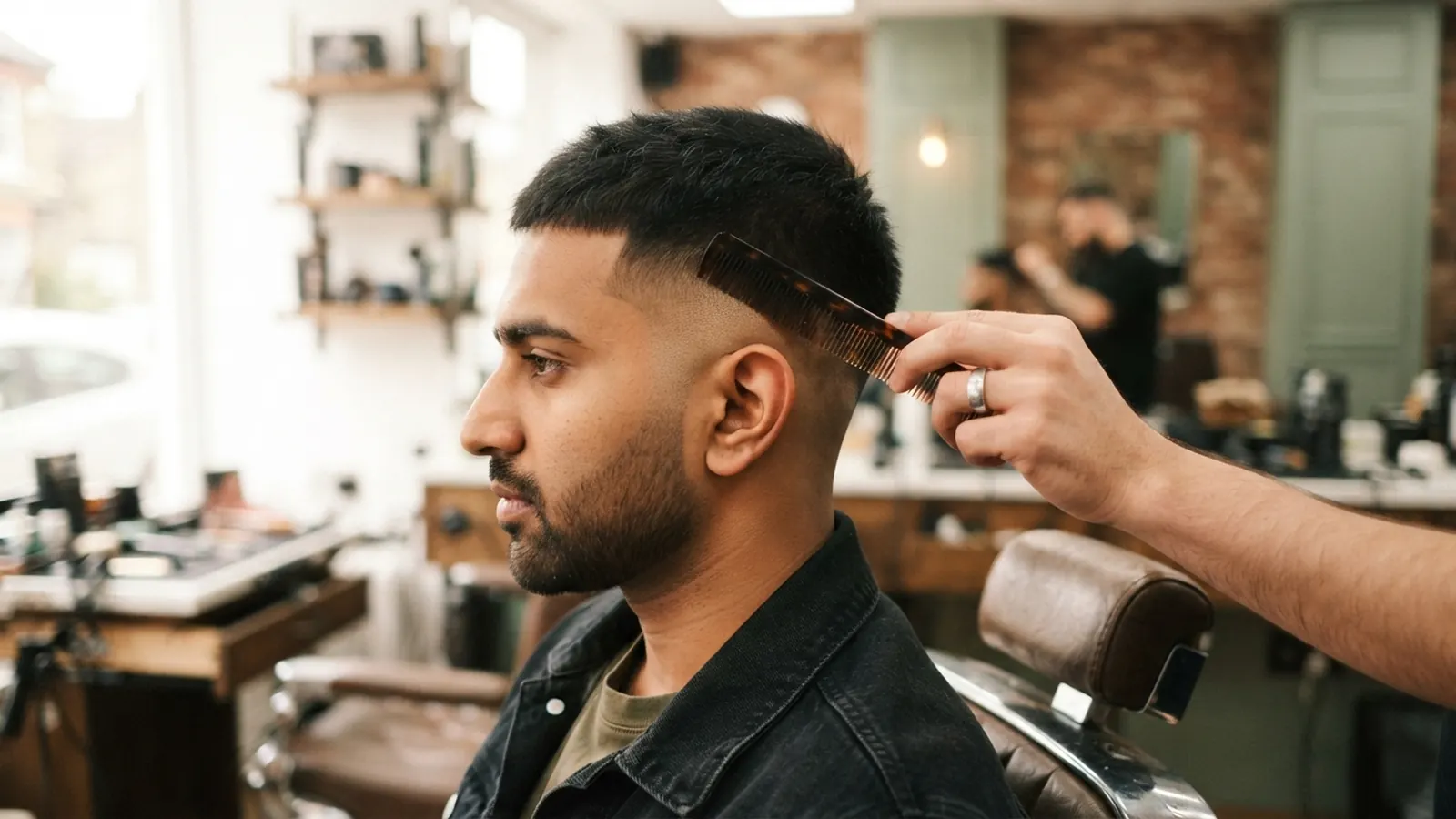
The in-between one, and honestly the cut we'd point most people towards. Short and clean at the neckline and around the ears, blending up gently, staying low. It suits straight, wavy, curly and coily hair and grows out gracefully.
Say: "Taper fade, half to one at the neckline and around the ears, blending to a three. Leave about two inches on top."
Shadow fade
A fade that never reaches skin. The shortest part is a one, so you see a shadow rather than scalp. A good choice for workplaces where a skin fade feels too sharp, or if a skin fade tends to look patchy on you.
Say: "Shadow fade, no skin, shortest a one."
Drop fade
The line curves down behind the ear and sits lower at the nape instead of running straight around the head. It follows the shape of your skull and looks especially good with curls and longer tops.
Say: "Drop fade, dropping behind the ear towards the neck."
Burst fade
The fade is a half-circle around the ear, and the back stays longer. You'll see it with curly tops, mohawks and the current wave of short mullets.
Say: "Burst fade around the ears only, keep the back longer."
Temple fade
Just the temples and sideburns, usually with a sharp line-up at the hairline. Popular on coily hair, waves and high tops because it cleans the shape without taking much off.
Say: "Temple fade with a line-up, leave the rest of the sides as they are."
What goes on top
The fade gets the attention, but the top decides whether the haircut works on your face.
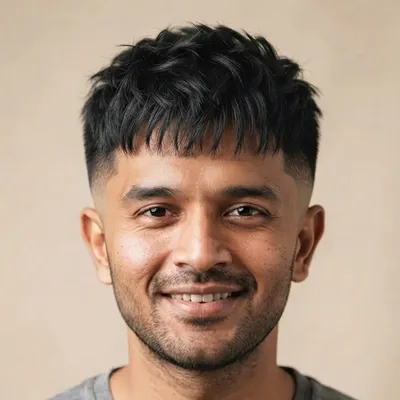
Textured crop. About an inch on top, choppy and pushed forward. Very little styling, which is why so many people ask for it. It also hides a hairline that's starting to recede.
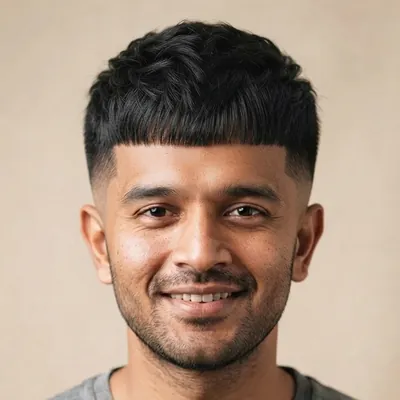
French crop. Like the textured crop, but with a short, blunt fringe cut straight across. Great on straight and wavy hair.
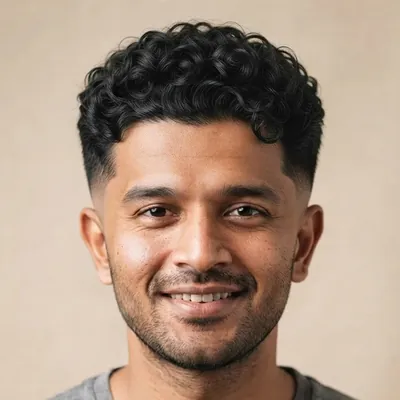
Curly top. Two to three inches of curls over a mid skin fade. Ask for the curls to be cut dry, so the barber can see where each one actually sits, and say no thinning scissors.
Quiff or side part. Longer on top, two and a half to four inches, styled up or across. Pairs well with a low or mid fade and suits most offices.
Undercut or two-block. Strictly speaking, not a fade. The sides are one short length and there's no blend into the top. If that's what you want, say "disconnected" so the barber doesn't blend it.
Which fade suits you
A few rules of thumb that hold up most of the time:
- Round face: mid or high fade with some height on top. More on that in our guide to haircuts for round faces.
- Long face: low fade or taper, with the top going forward rather than straight up.
- Square face: you've won the lottery. Mid fade, textured top, done.
- Thin or fine hair: a fade makes the top look denser by contrast. Keep the top short and textured, not long and flat.
- Curly or coily hair: drop, burst and temple fades work with your curl pattern instead of against it.
Rules of thumb only get you so far, though. Two men with the same face shape can look completely different in the same cut, because hairline, hair density and ears all matter. That's the reason we built CheckMyHairstyle: upload a selfie, pick a few fades, and see each one on your own face before anyone touches your hair. Each preview comes with a barber card listing the numbers, in English and Hindi.
How long a fade stays sharp
Hair grows roughly a centimetre a month. That doesn't sound like much, but on a skin fade it's the difference between "fresh" and "grown out" within ten days.
| Fade | Looks fresh for | Touch-up every |
|---|---|---|
| Skin fade | About a week | 1–2 weeks |
| Mid or high fade | 1–2 weeks | 2–3 weeks |
| Low fade | 2–3 weeks | 3–4 weeks |
| Taper | 3–4 weeks | 4–6 weeks |
Want fewer visits? Go a number longer at the bottom (a one instead of skin) and a little lower. You'll barely notice the difference in the mirror, and your barber bill will.
Saying it in the chair
Give four things, in this order: height (point to where it should start), depth (skin, zero, half or one at the bottom), top length (pinch it with your fingers), and finish (natural or squared neckline, line-up or soft hairline). Then show a photo.
Nervous? Say "start low, we can go higher". It costs the barber two extra minutes and saves you three weeks of growing it back.
If you want the full script, including what to say when it's going wrong halfway through, read what to say at the barber.
Try these on your face
- Taper FadeSee it on you
- Textured CropSee it on you
- Curly Top FadeSee it on you
 French cropSee it on you
Keep reading
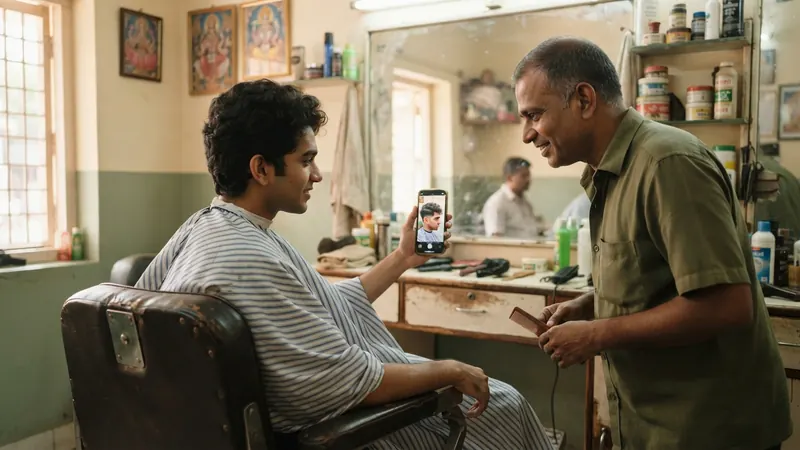
What to Say at the Barber to Get the Haircut You Actually Want
The words barbers use, a simple order to say things in, how to use a photo properly, what to do when it goes wrong, and tipping in India, the US and the UK.
Read the guide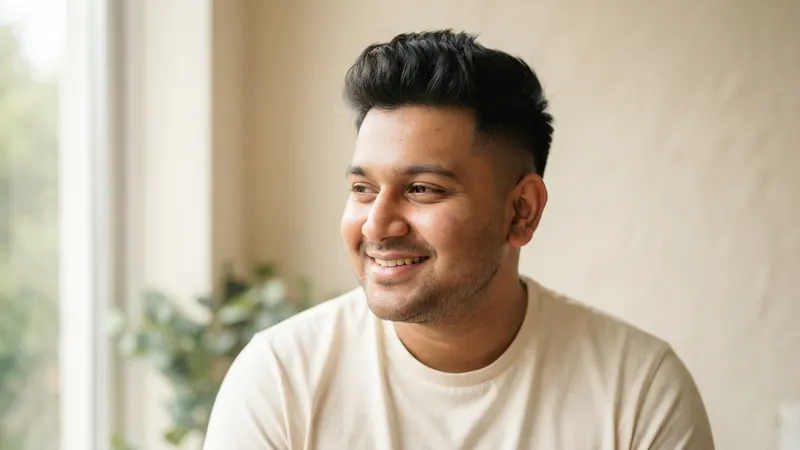
Haircuts for Round Faces (Men): What Works, What Doesn't
The best haircuts for round faces in men: a quick way to check your face shape, why height on top and short sides work, cuts to skip, and how a beard helps.
Read the guide