What to Say at the Barber to Get the Haircut You Actually Want
In this guide
"Short on the sides, a little off the top."
Every barber has heard that sentence thousands of times, and every one of them hears it differently. Most bad haircuts aren't bad cutting. They're a gap between what was in your head and what came out of your mouth.
The good news: closing that gap takes about thirty seconds and a handful of words.
Use numbers, not adjectives
"A bit shorter" is 5 mm to one person and 2 cm to another. Numbers aren't open to interpretation.
For the sides, that means clipper numbers. In most Indian shops you'll hear them as "machine": "do number machine", "zero se start karo". The rough scale:
| Number | Length |
|---|---|
| 0 | about 1 mm, scalp clearly shows |
| 1 | 3 mm |
| 2 | 6 mm, the classic short back and sides |
| 3 | 10 mm |
| 4 | 13 mm |
For the top, use inches or centimetres, or just pinch the length you want to keep between your fingers and show it. "Leave this much" is a perfectly good instruction.
A handful of words that do a lot of work
You don't need to talk like a barber. But knowing these means you'll understand what they ask you, and you can be precise when it matters.
Taper vs fade. A taper only shortens the edges, the neckline and around the ears. A fade takes the short part higher up the sides, often down to skin. If you want the full breakdown, we wrote a whole guide to fade haircuts.
Neckline. How the hair ends at the back of your neck. Blocked is a straight line, sharp for a week and messy after. Tapered fades out naturally and grows out much better. If you don't get haircuts often, ask for tapered.
Point cutting. Snipping into the ends for a softer, piece-y texture on top. Good for crops and fringes.
Thinning. Removing bulk with thinning scissors or a razor. Useful on very thick straight hair. On curly hair it usually means frizz, so if your hair curls, say "please don't thin it" before they start.
Disconnected. Sides and top are different lengths with no blend in between, as in a two-block or undercut.
Line-up. A sharp outline along the hairline and temples with a trimmer.
The order to say it in
When you sit down, run through this, top to bottom. It takes less than a minute.
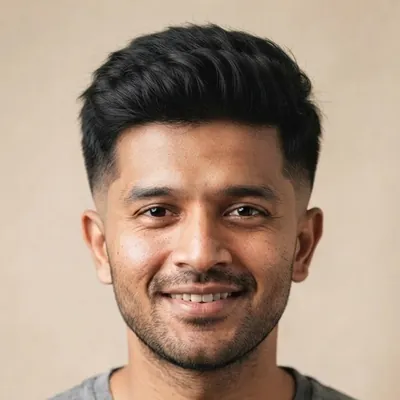
- The style, with a photo. "Something like this."
- The sides. "Low fade, starting from a zero, going up to a two." Or "number three, scissors above the ears."
- The neckline. "Tapered at the back, please."
- The top. "Keep about an inch and a half, textured." Or "just a centimetre off, same shape."
- The front. "Fringe just above the eyebrows." Or "long enough to push back."
- What you don't want. "No thinning." "Don't touch the sideburns." "No hard part."
Then ask one question back: "Will that work with my hair?" A good barber will tell you if your crown cowlick or your hairline is going to fight the style. That answer is worth listening to.
Photos: how to make them actually useful
A photo beats a paragraph. But a photo of a model with thick, straight, perfectly styled hair can mislead both of you if your hair is wavy and fine.
- Pick a photo of hair that's similar to yours in thickness and texture.
- Show the side and the back if you can find them. Plenty of cuts look great from the front and odd from behind.
- Point at what you like. "This fringe, but my sides shorter" is a perfect instruction.
- Be honest about length. If you have three centimetres on top, a ten-centimetre quiff isn't happening today.
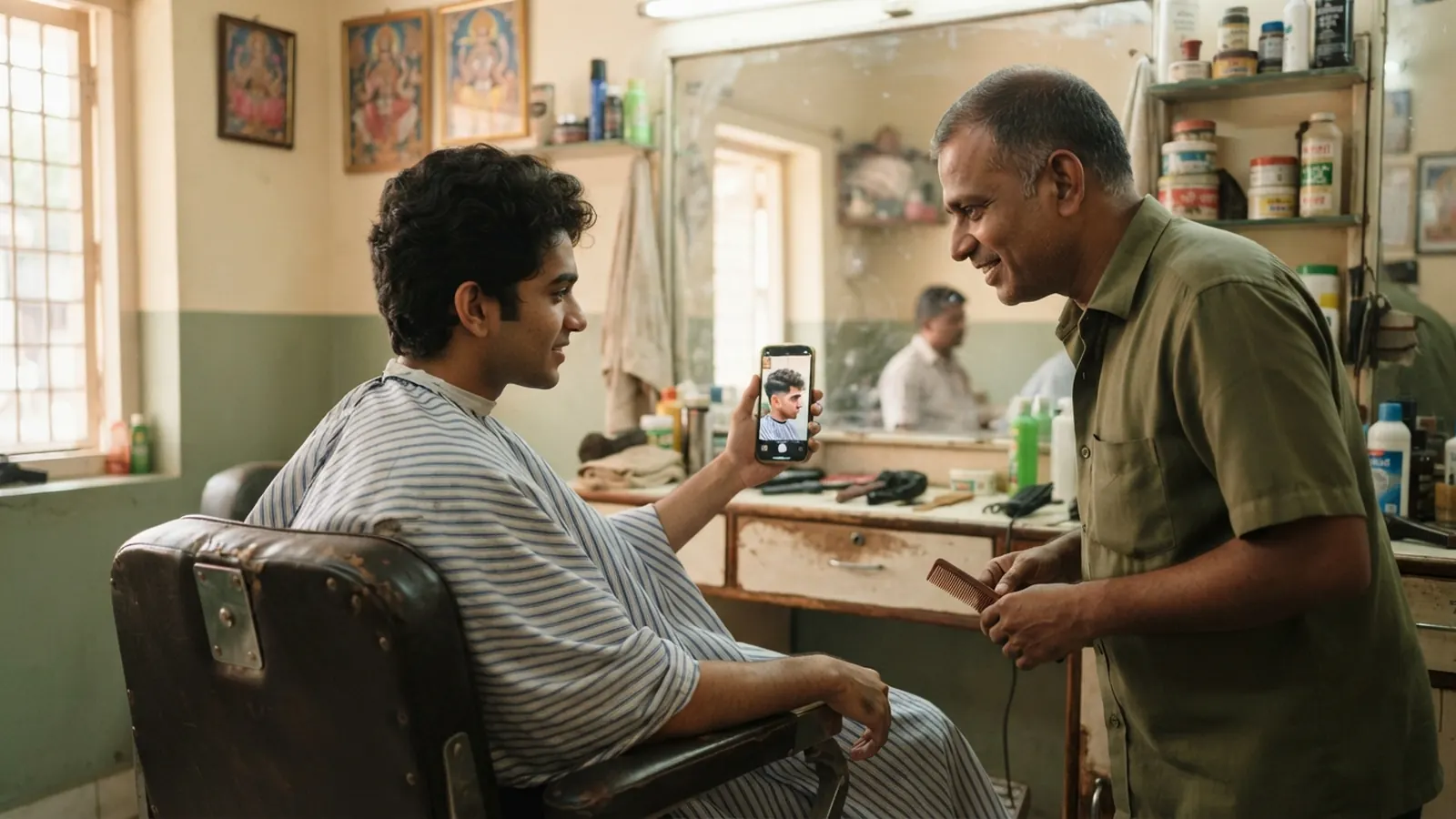
The most useful photo is one of the haircut on your own head. That's what CheckMyHairstyle does: upload a selfie, pick a few styles, and see each one on your face. With each preview you get a barber card that spells out the sides, top and finish in barber terms, in English and in Hindi. If your barber is more comfortable reading Hindi, hand them your phone and let the card do the talking.
When it's going wrong halfway through
Speak up early. If the first side looks higher than you wanted, say so before the other side is done. "Can we keep the other side a bit lower, and bring this one down to match?" is a normal sentence in a barbershop. Waiting until the end and then sulking is the expensive option.
At the end, look at the back in the hand mirror properly, not a polite glance. Ask for changes there and then, calmly and specifically. Point at the spot.
Noticed something at home? Most decent shops will fix it for free within a few days. Call and ask.
If it's simply too short, there's no fix except time. Give it two to three weeks, then go back and let the barber rebalance it.
A few unwritten rules
- Turn up with clean hair and no heavy product. Pomade makes cutting harder.
- Put the phone away during the clipper work. Looking down moves your head, and your neckline follows.
- Small talk is optional. "Mind if I just relax?" is fine.
- Don't fight the head tilt. When the barber moves your head, go with it.
Tipping: it depends where you are
- India: not expected at most neighbourhood shops. Rounding up, or leaving a little extra for a good cut, is appreciated. In premium salons a small tip is more common, and some add a service charge to the bill.
- US: expected. Most people tip somewhere around 15–20%.
- UK: appreciated, not obligatory. Rounding up is common.
Anywhere: if your barber squeezed you in last minute, or fixed someone else's mistake, a tip is a good way to say thanks.
Find a barber and stay with them
The best haircut you'll ever get is probably your fourth visit to the same barber, not your first. They learn your cowlicks, your hairline, how your hair grows out after two weeks.
Go back to the same person. Book the next cut before you leave. Tell them what happened last time ("the sides went puffy after ten days"). And keep a note on your phone with your recipe, something like: Low fade 0 to 2, inch and a half on top, tapered neckline, matte clay. If your barber is ever away, anyone can follow it.
Quick answers
What do I say if I just want a trim?
Say how much and where. "Same shape, take about a centimetre off the top, tidy the sides and the neckline." If you know your numbers, add them: "Same number two on the sides."
Is it rude to ask the barber to fix something?
No. Asking politely and specifically before you leave is normal, and most barbers would much rather fix it than lose you as a customer.
Do you have to tip a barber in India?
Generally no. It isn't expected at most local shops, though a small tip for a good cut is always appreciated. Premium salons may include a service charge.
Try these on your face
- Taper FadeSee it on you
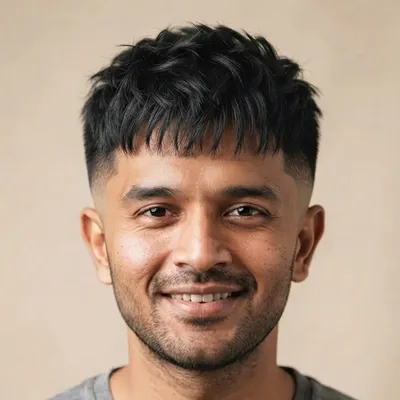 Textured CropSee it on you
- Side partSee it on you
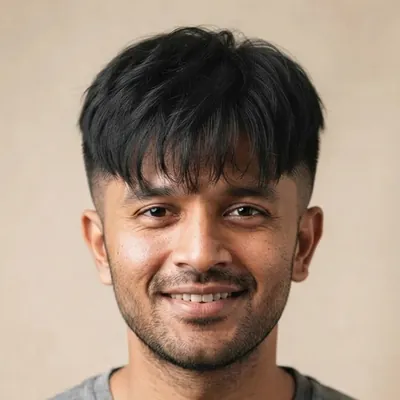 Two-block cutSee it on you
Keep reading
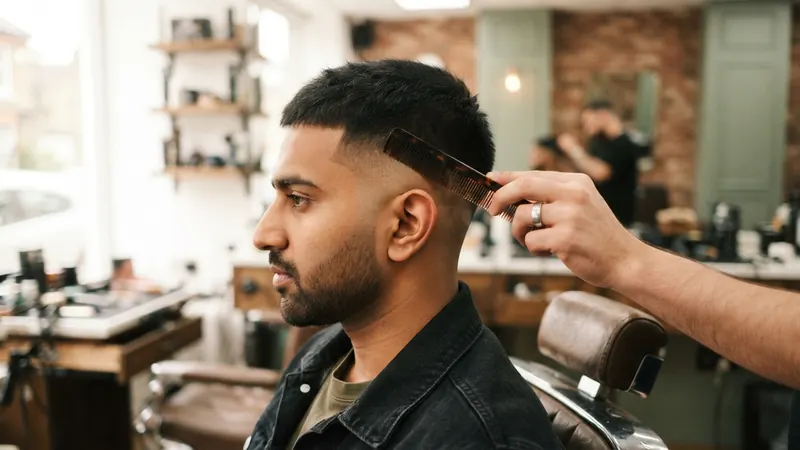
Fade Haircuts for Men: Every Type, and What to Tell Your Barber
Low, mid, high, skin, taper, drop and burst fades in plain words, with clipper numbers in mm, which one suits you, and the exact sentence to say in the chair.
Read the guide
Haircuts for Round Faces (Men): What Works, What Doesn't
The best haircuts for round faces in men: a quick way to check your face shape, why height on top and short sides work, cuts to skip, and how a beard helps.
Read the guide