Textured Crop Haircut: Who It Suits and How to Ask for It
In this guide
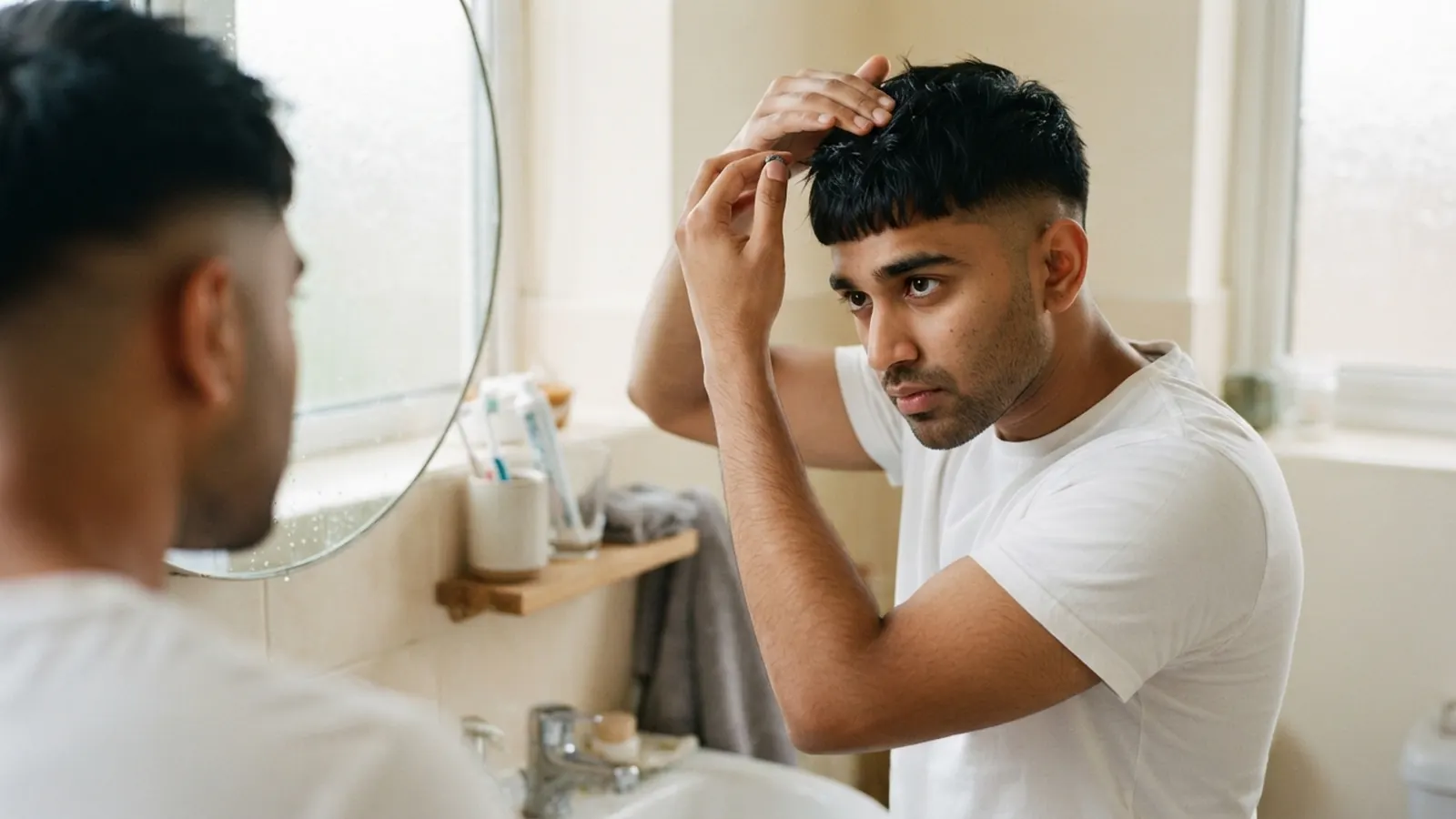
You know the look. Short, choppy hair pushed forward, a fringe that stops well above the eyebrows, sides faded down tight. It looks like the guy spent ten minutes on it. He spent two.
That's the whole appeal of a textured crop haircut. It's short enough to ignore on a lazy day and messy on purpose, so a bad hair morning mostly looks like the style. For thick, straight Indian hair that refuses to lie flat, it might be the most forgiving short cut there is.
It isn't for everyone, though, and the name gets used loosely enough that you can walk out with something quite different. So here's what to ask for, and when to pick something else.
What the cut actually is
Three parts, and you need all three.
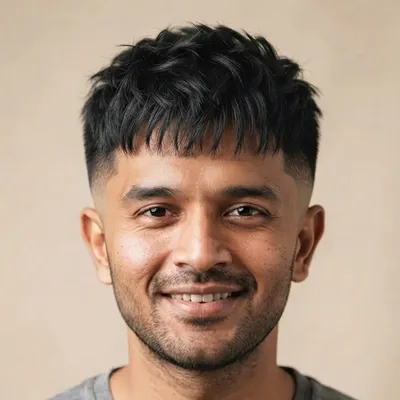
The top is about 2.5 to 4 cm (1 to 1.5 inches), point-cut with the tips of the scissors so it breaks into separate pieces instead of sitting as one flat sheet. That choppiness is the "texture". Without it you just have a short haircut.
The fringe is short and pushed forward, roughly a centimetre above the eyebrows, and a bit uneven rather than a clean line.
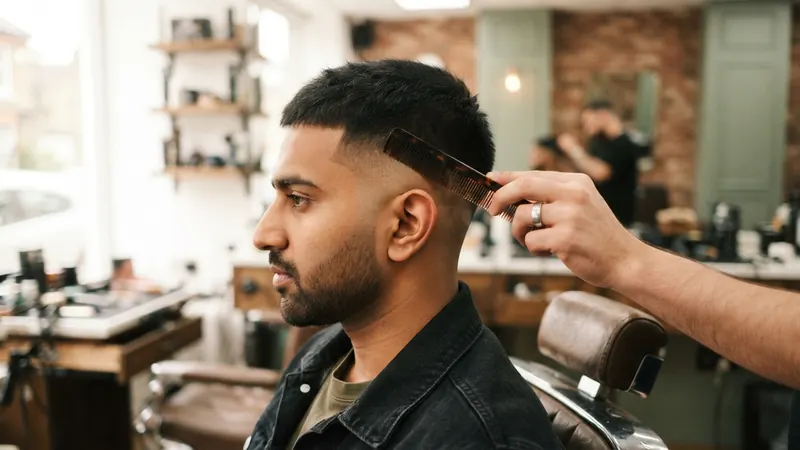
The sides are short. Usually a low skin fade, sometimes a mid fade, sometimes a soft taper with no skin showing.
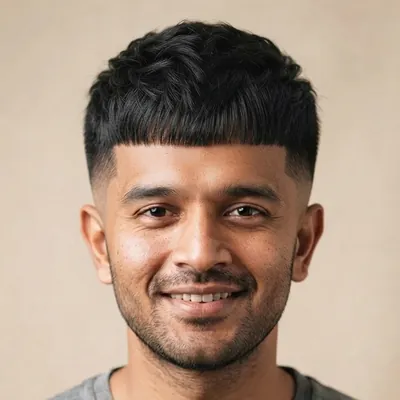
People mix it up with the French crop, and fair enough, they're cousins. The French crop has a blunt fringe cut straight across and a neater finish. The textured crop is the scruffier sibling. If a barber gives you one when you asked for the other, you're in the right neighbourhood, but say "choppy fringe, not straight" if you care.
Who it suits, and who should skip it
Get it if your hair is straight or wavy and on the thicker side. That's the ideal case. Thick hair holds the choppy pieces all day, and waves add texture for free, so you need less product.
Get it if your temples are starting to recede. The fringe sits forward over the hairline instead of pulling everything back and putting the corners on display. Ask for the front a touch longer and choppy, not blunt.
It works on fine hair, with one condition. Keep the top nearer 4 cm and tell the barber not to thin it. Thinning scissors on fine hair leave the top see-through by day three.
Think twice if you have a round face. A heavy fringe adds a horizontal line across your forehead and makes a round face look rounder. The fix is a mid fade to slim the sides and a little lift at the front instead of a flat fringe. Our post on haircuts for round faces goes into this.
Skip it if your hair is properly curly. Cut curls to 3 cm and point-cut them and you'll get frizz, not texture. Leave 5 cm or more and you're really asking for a curly top fade, which is a better cut for you anyway.
Skip it if you want hair you can push back or part. A crop is a forward cut. It won't do a side part for a wedding.
How to ask your barber for a textured crop
"Short sides, messy top" gets you a generic short back and sides about half the time. Say it in this order:
- Sides: "Low skin fade, zero at the bottom, blending up to a number two." In a neighbourhood shop that's "zero machine se start, upar do number."
- Top: "Keep about an inch to an inch and a half. Point-cut it so it's choppy. Please don't thin it."
- Fringe: "Short, forward, about a centimetre above my eyebrows. Uneven, not a straight line."
- Neckline: "Tapered, not blocked." It grows out softer.
Want something less sharp for the office? Swap step one for a taper: "number one at the neckline, up to a three, no skin." It grows out more slowly too.
The clipper numbers, so you know what you're asking for:
| Number | Length | Where it goes in a crop |
|---|---|---|
| 0 | about 1 mm | Bottom of a skin fade |
| 0.5 | 1.5 mm | Start of a low fade without full skin |
| 1 | 3 mm | Start of a taper |
| 2 | 6 mm | Top of a tight fade |
| 3 | 10 mm | Top of a softer taper |
The thing that trips people up most is the fade height, not the top. A low fade keeps it looking like a crop. A high skin fade turns it into something louder, and on a long, narrow head it can make your face look even longer. If you're unsure, go low.
Bring a photo, and ideally one of the cut on your own face. A model's photo has someone else's hairline and density. We built CheckMyHairstyle so you can upload a selfie, see the crop on yourself, and get a barber card with these exact instructions in English and Hindi to hand over. More on the chair conversation in what to say at the barber.
The two-minute morning
This is the part people overcomplicate. You're after separation and a forward direction. Nothing sculpted.
Wash or wet your hair, then rough it up with a towel until it's damp, not dripping. If you have an extra minute, blow-dry it forward from the crown on medium heat, lifting the roots with your fingers. No brush. A brush flattens exactly what you're trying to build.
Then take a pea-sized bit of matte clay or matte paste. Rub it between your palms until you can barely see it. Work it into the roots from the back forward, then pinch and twist the ends into pieces. Push the fringe forward and break it up with your fingertips.
That's it.
Skipping the dryer is fine. Paste on damp hair, push forward, go. It'll sit softer, but it still looks intended.
Matte is the point. Gels and shiny pomades make the pieces clump together and look wet, which kills the texture. If your hair is fine or slippery, two sprays of sea salt spray before drying gives it grip. If it's very thick, a stronger clay holds better than paste.
In humid weather, use less product, not more. A heavy hand plus sweat by noon gives you a greasy helmet. A small amount of clay, worked in properly, holds up better.
Hard water can make thick hair feel coarse and stiff, which a crop actually forgives better than most cuts. If it's getting straw-like, a light conditioner on the ends after washing is enough. The cut is too short to need much more.
Keeping it sharp
A crop is short, so it shows growth fast. A skin fade looks fresh for about a week and wants a touch-up every two. A taper gives you three to four weeks. The top tolerates more, so if you're stretching visits, it's the sides that tell on you. Our post on how often to get a haircut has timings for other cuts.
Between visits, it's fine to tidy the neckline and around the ears with a trimmer. Leave the blend alone unless you've practised.
How it grows out
This is the crop's quiet strength: there's no awkward stage for the first few weeks, because longer choppy hair still reads as a crop. Somewhere past 5 cm on top you get a choice.
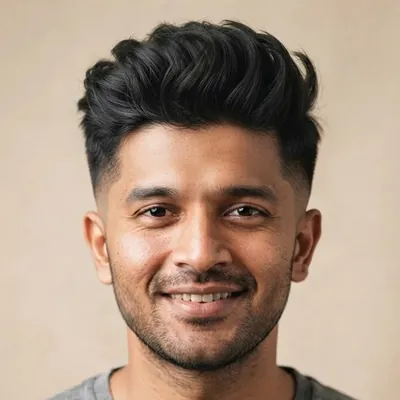
Go up into a textured quiff. Let the front grow to 7 to 10 cm, keep the crown shorter, and blow-dry it up and back instead of forward. Same sides, same products.
Go forward and softer into a two-block. Keep the sides short, let the top and fringe grow to 6 or 7 cm, and let it fall forward with a light part. It's the most natural next step from a crop, since you're already wearing the hair forward.
Grow it all out into a curtain fringe. It works, but it takes a few months and there's a stretch around 8 cm where the fringe hits your eyes and does nothing useful. Be patient or skip it.
If you don't know which way to go, the two-block is the easy one.

Quick answers
How long does my hair need to be?
About 3 cm on top to get visible texture. Coming from a buzz cut, give it four to six weeks before you ask for a crop.
Does a textured crop work with thinning hair?
Often better than longer styles, because the short, piece-y top hides scalp and the fringe covers the temples. Skip the thinning scissors, keep the top a little longer and use a light matte paste.
Try these on your face
- Textured CropSee it on you
 French cropSee it on you
- Two-block cutSee it on you
 Textured quiffSee it on you
Keep reading
Fade Haircuts for Men: Every Type, and What to Tell Your Barber
Low, mid, high, skin, taper, drop and burst fades in plain words, with clipper numbers in mm, which one suits you, and the exact sentence to say in the chair.
Read the guide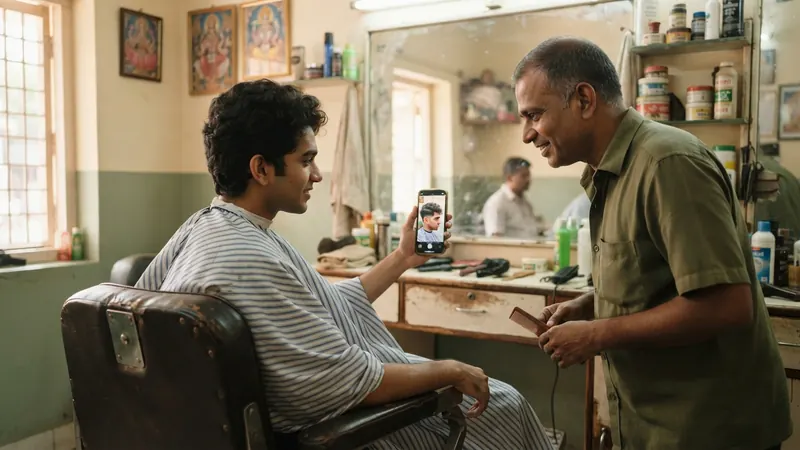
What to Say at the Barber to Get the Haircut You Actually Want
The words barbers use, a simple order to say things in, how to use a photo properly, what to do when it goes wrong, and tipping in India, the US and the UK.
Read the guide
How Often Should Men Get a Haircut? A Schedule by Style
Skin fades every two weeks, crops every month, longer cuts every two months. A schedule by style, the signs you're overdue and how to buy an extra week.
Read the guide